

Calling the 2026 Ford Bronco® and 2026 Explorer® SUVs is accurate in the same way that calling hiking boots and running shoes footwear is accurate. It doesn't tell you much about what they're designed to do. Bronco® starts with standard 4x4, offers removable doors and roof panels, and can be equipped with 35-inch tires and locking differentials. Explorer® takes the family route with seating for up to 7 passengers, 3 rows, 85.8 cu. ft. of maximum cargo space, and up to 5,000 lbs. of towing capacity. For drivers around Plainwell, the choice comes down to a simple distinction: Bronco® is designed around where you can go, while Explorer® is designed around who and what you can bring.
Bronco® Starts with Hardware Meant for Leaving Pavement
The standard 2026 Bronco® engine is a 2.3L EcoBoost® 4-cylinder producing up to 300 hp and 325 lbs. ft. of torque on premium fuel. The available 2.7L EcoBoost® V6 raises output to 330 hp and 415 lb-ft. of torque, while Bronco Raptor® uses a 3.0L EcoBoost® V6 producing 418 hp and 440 lb-ft. of torque. More important off pavement is what surrounds those engines. Standard 4x4, a 2-speed transfer case, and up to 7 available G.O.A.T. Modes® give the Bronco® mechanical tools designed specifically for changing terrain rather than simply providing additional traction during poor weather.
Sasquatch® Is More Than an Appearance Package
The available Sasquatch® Package brings 35-inch all-terrain tires, electronic-locking front and rear axles, a 4.7 final-drive ratio, and HOSS 2.0 suspension with Bilstein® position-sensitive dampers. Depending on configuration, ground clearance can reach 11.6 inches, with a maximum approach angle of 43.3 degrees. Most Bronco® models can tow up to 3,500 lbs. when properly equipped, while Bronco Raptor® increases capacity to 4,500 lbs. Add the choice of 2-door or 4-door bodies plus removable doors and roof panels, and the Bronco® clearly favors outdoor use and trail capability over maximizing passenger and cargo volume.
Explorer® Uses Its Size for People Instead of Ground Clearance
The 2026 Explorer® takes a completely different route. Its standard 2.3L EcoBoost® 4-cylinder produces 300 hp and 310 lbs. ft. of torque, while Explorer ST steps up to a 3.0L EcoBoost® V6 producing 400 hp and 415 lbs. ft. of torque. Both engines pair with a 10-speed automatic transmission, and Intelligent 4WD is available. The larger distinction is behind the front seats. Explorer® accommodates up to 7 passengers across 3 rows, making it far better suited to families that regularly fill more than 2 rows. It's an SUV built around moving people comfortably rather than negotiating obstacles between the trees.
Explorer® Makes Towing Less Dependent on Configuration
Every 2026 Explorer® includes a Class III Tow Package, and properly equipped models can tow up to 5,000 lbs. with either engine. The package includes a Class III hitch receiver, 7-wire harness, and 4- and 7-pin trailer connectors. Cargo capacity adds another advantage for family use, with 16.3 cu. ft. behind the 3rd row and as much as 85.8 cu. ft. when the rear seating is folded. That's useful flexibility for luggage, sports equipment, home-improvement supplies, or longer trips where the passengers seem to require considerably more cargo space than their own physical dimensions would suggest.
Their Technology Reveals What Each SUV Is For
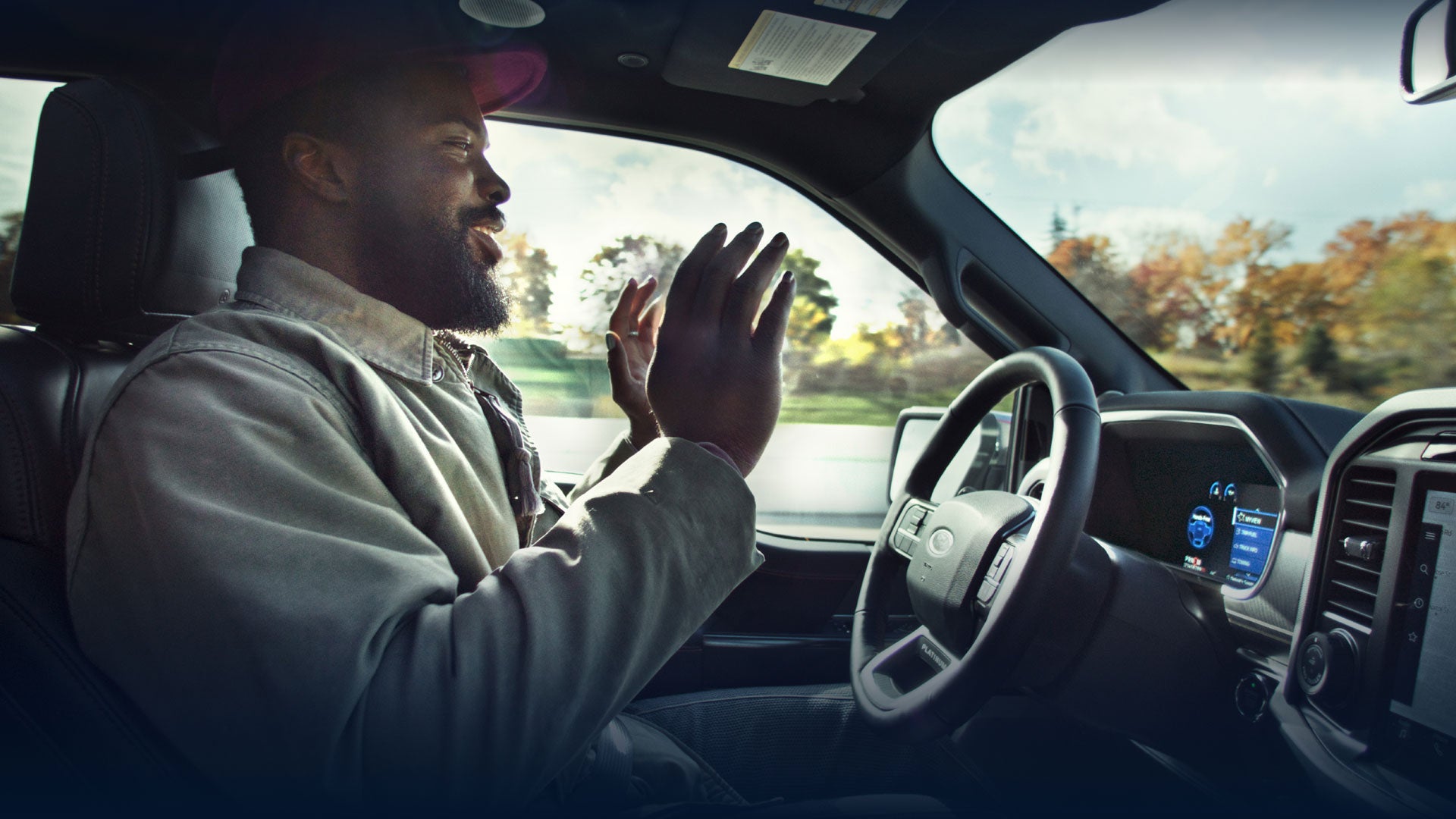
Explorer® and Bronco® both offer Ford Co-Pilot360® driver-assistance technology, but their available systems follow the character of each vehicle. Explorer® offers Ford BlueCruise for hands-free driver assistance on compatible roads, while the Ford Digital Experience integrates Google Maps and Google Assistant along with wireless Apple CarPlay® and Android Auto™ compatibility. Bronco® directs more attention toward low-speed trail work with available Trail Control™, Trail Turn Assist, and off-road camera views.